Canvas Gallery Wrap
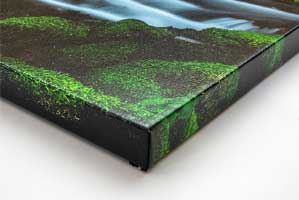
Canvas Gallery Wraps are made with a print on Professional Photo Paper bonded onto museum quality canvas, or a Fine Art Print printed directly onto canvas material. The print is then wrapped around an artist’s stretcher frame which is 1.5 inches deep, and finished with your choice of hanging hardware.
Thin Wrap Canvas
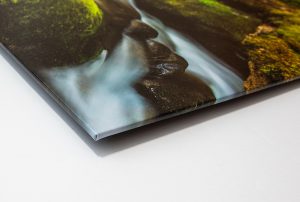
Is made on Fine Art Canvas material. The image is then over-laminate with a Satin Laminate or a Glossy laminate.
The resulting product is then wrapped on Gatorboard. For a striking effect a spacer is applied (Floating Mounting Block) to the back of the ThinWrap, which allows the image to be hung and appear to float from the wall. ThinWraps can also be ordered as designer Wall Clusters and Splits. (Please Contact me for these options).
Metal
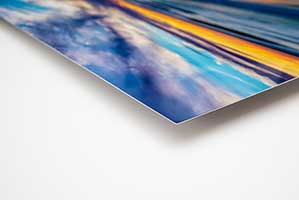
All metal prints are printed on white gloss aluminum which provides a smooth glossy finish with a pure white background to give the photo a luxurious feel. This option gives the appearance that your print is behind glass without the overwhelming glare effect that you get from acrylic prints. The photo is printed on F-series Epson printers that provide the sharpest and widest gamut for the dye sublimation process.
The framing for the metal photo is made of a 1” thick aluminum solid tube that are welded together to offer solid support. The frame mount sits the print 1” off the wall and ensures the print will hang with a nice straight profile. All hardware is included for easy hanging. (For special orders please contact me).
Styrene
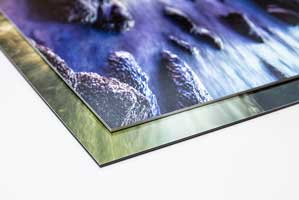
Styrene is a super smooth plastic mounting substrate that resists warping, making it an excellent choice for adding durability to prints of all sizes, and providing rigidity to prints that will be framed. Available in your choice of White or Black. Choice of paper prints for mounting on styrene are Kodak ENDURA Lustre “E” and Kodak ENDURA Metallic.(Please contact me about other mounting options).
Wall Mural
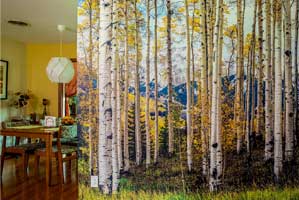
Wall Murals are made out Premium Canvas, it is above and beyond in terms of quality. The look and feel is that of an artist’s canvas, this makes for a high-end presentation and easy installation.
Murals are peel and stick and will not cause harm to your wall, they are also washable with a damp rag. Murals can be moved to different walls of your home as you desire. Make sure when moving a mural your hands are as clean as possible to prevent from getting dirt or dust on the adhesive, at that point you will be able to move them freely from wall to wall as much as you wish.
Bathrooms are also a good place to apply your mural, as they can withstand high moisture. When installing make sure the wall is completely free of any moisture and dust. The photo below is a mural of one of my photographs in my home.
Because the nature of walls being different sizes I as ask that you please contact me to make an order.
Xpozer Photo
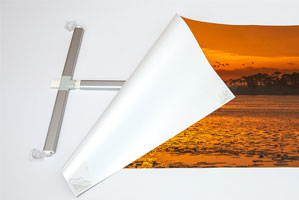 Images are printed on striking Vivid Satin material. With no frame needed, they float away from the wall for a modern gallery look. The lightweight aluminum tension hanging system makes Xpozer highly portable and quick to assemble. Group multiple Xpozer Prints to create beautiful wall art displays, and change them up as often as you like with Xchange Prints.

Kevin Bruce Taylor
Kevin Bruce Taylor is a former professional guitar player who discovered a love for landscape photography while traveling alone about 7 years ago. Along with finding and recreating nature’s beautiful colors and emotions in his photography, Kevin has also developed expertise on how each picture can be further appreciated according to the medium it is printed on.
His works include metal, acrylic, canvas and other fine art papers. Kevin recently completed a wallpaper of one of his landscapes that can be seen at his home and is interested in printing more of his moving and colorful scenery in larger formats. Kevin also shoots for personal and commercial projects.